Examining Survivor Data of the Titanic with Respect to Gender and Age
While the final report of the U.S. Senate Committee on Commerce investigating the sinking of the Titanic acknowledged a preference given to women and children, no acknowledgement was made toward the origin of this policy as a reinforcement of gender constructions as a response to damaged masculinity. Regarding age demographics, the average of first-class elderly passengers that survived outpaced second- and third-class passengers in other age classes. Both of these data examinations explore two forms of inequality: which I will term conscious and unconscious.
Age Demographics
In any life-threatening situation, the expectation of survival lends itself to those that are fit and fit compared to those that are fragile and elderly. For the most part, that rule remained true within the disaster that was the sinking of the Titanic: more younger passengers survived than their older counterparts. Still, the probabilities of survival between the classes left a notable difference once the ages were separated by class.
The probability of survival as an elderly member of the first-class ticket holders is higher than those of adult and middle age in the third-class ticket holders.1
The differences, while small, are interesting because they break the presupposition of preference given to younger, fitter passengers over the elderly passengers.
Credit: Encyclopedia Titanica
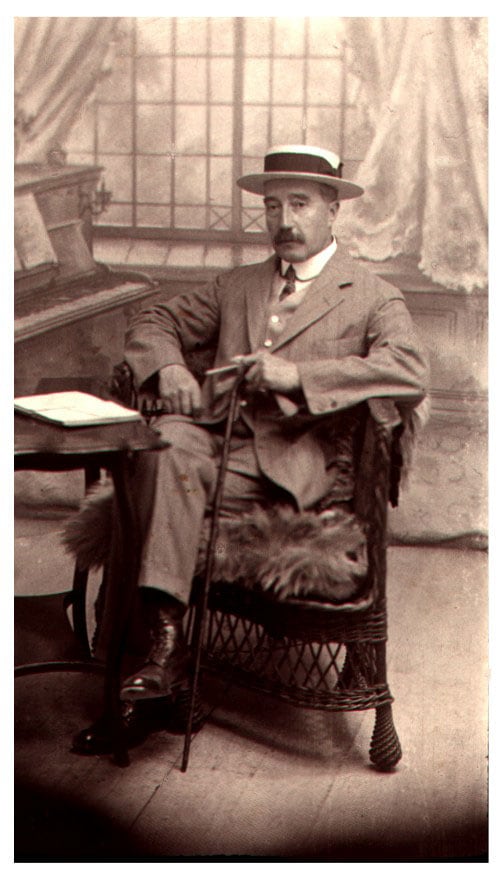
The oldest passenger on the Titanic was Mr. Algernon Henry Wilson Barkworth, who was 81 years old at the time of his voyage as a first-class passenger. Barkworth was a Justice of the Peace in Britain.
“To tell the truth, I didn’t think about getting into a lifeboat, and the boats were all gone before we realized the condition of the ship was so serious.”2
Barkworth carried no indication of worry in his movement until it was too late, according to his testimony. By all accounts, he should not have survived as “[f]ailure to secure a seat in a lifeboat virtually guaranteed death because the average ocean temperature was about 2 degrees Celsius (35 degrees Fahrenheit).”3
Yet, he survived.
Before jumping off the Titanic, Barkworth spoke with “Howard Case, manager of the Vacuum Oil Company in London.” Case refused to disembark from the ship, replying to Barkworth that he “wouldn’t think of quitting the ship” and that “she’ll swim for a week,” thereafter he “calmly lit a cigarette.”4 Barkworth and Case both shared confidence in the ship’s design, a phenomenon that will be explored later in this article.
Barkworth “simply stepped off” from the ship and swam to a capsized lifeboat where he was eventually rescued. As a reminder, Barkworth was 81 years old when he accomplished this harrowing feat. His testimony adds depth to the data of survival amongst elder first-class passengers. In part, their survival could be attributed to luck and fitness at an elder age. Barkworth provides tension between his story and the data.
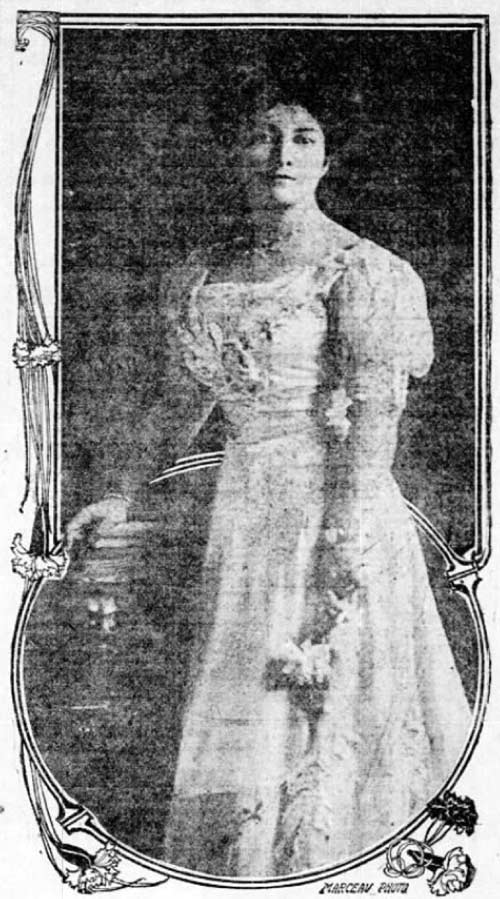
The second oldest first-class passenger on the Titanic was Mrs. Tyrell William Cavendish, age 76, most commonly referred to as Julia Florence Cavendish. Her story contrasts that of Barkworth.
Cavendish boarded a lifeboat. Her husband comforted her by assuring that “he was all right.”5 Cavendish also recalls a male passenger attempting to jump on her lifeboat.
“One man tried to get in the boat, but a sailor, after questioning him, threw him aside.”
Other male passengers played to their gender by initially refusing to board the ship.
“A Canadian, who stated that he could row, turned to a group of men on the deck, who were watching the proceedings and said: ‘I can row, but if there is room for one more let it be a woman. I am not a coward.'”
Credit: Encyclopedia Titanica
Cavendish’s testimony is harmonious to the data that we see: that survival policy acted in defiance of the presupposition of preference toward younger passengers. But, why are the stories of Barkworth and Cavendish so different?
Gender Constructions & Masculinity
Undeniably, female passengers were more likely to survive than their male counterparts. The policy has reverberated for ages: “women and children first!” became the defining feature of the Titanic’s survival mission.
Why?
The Titanic was a “romantic symbol of the technological achievements of the Industrial Revolution.”6 From her inception, she was a mechanical wife of beauty under control of her masculine crew. Her disaster, however, would make her a defiant wife whose ignorance killed her masculine controllers. During the disaster, the masculinity of the operators, builders, and project managers of the Titanic were inseparable from the salvation of the star liner: if she failed, the masculinity of those that created her had failed too.
Abandoning the ship was an indictment of the gender constructions of the time: “male passengers had sacrificed themselves for an ungrateful woman.”7
As a corollary to female salvation, glorification of male sacrifice became the band-aid to hurt feelings over the disaster. Even females that had perished in the disaster were described as “were unaware of the danger and had no comprehension of sacrifice. Women were as vain and uncontrollable as the [feminine] ship herself.”8
Much of the first-class passengers were calm, such as Barkworth and Case. Another first-class passenger, Archibald Gracie, provided testimony to the U.S. Senate Committee on Commerce investigating the sinking. Gracie testified that “ice was handed to [them] with the statement that [they] had better take this home for souvenirs.” After being alerted to the damage, Gracie calmed packed three bags so that “it would be easy for the steward to get [his] luggage out.” There was very little panic amongst the guests near Gracie, as they had confidence (possibly false confidence) in the masculinity of the ship’s handlers.9
Conclusion
The policy was based not on altruistic husbands and fathers but as an immediate response to mend a degraded masculinity brought by the failure of the crew to avoid disaster. The data examined in this project spells an unfortunate reality: survival aboard the Titanic was decided before the accident had even happened. Social factors like class, gender, and age would be used as guidelines to a given passenger’s chance to avoid their demise.
Bibliography
Frey, Bruno S., Savage, David A., and Torgler, Benno. “Behavior under Extreme Conditions: The Titanic Disaster,” The Journal of Economic Perspectives 25, no. 1 (2011): 209-222.
Larabee, Ann E. “The American Hero and His Mechanical Bride: Gender Myths of the Titanic Disaster.” American Studies 31, no. 1 (Spring 1990): 5-23.
Monterroso-Ortega, Sergio. Titanic Passenger Survival Dataset, September 21, 2025.
“Mr. Algernon Henry Wilson Barkworth.” Encyclopedia Titanica.
“Mrs. Tyrell William Cavendish.” Encyclopedia Titanica.
“Stepped off Titanic and a Plank Hit Him.” The Sun (New York, NR), April 25, 1912. https://www.loc.gov/item/sn83030272/1912-04-25/ed-1/.
“Told by Survivors: Graphic Narratives of the Titanic Tragedy.” Evening Star (Washington, D.C.), April 19, 1912. https://www.loc.gov/resource/sn83045462/1912-04-19/ed-1/.
U.S. Senate Committee on Commerce Investigation of the Titanic, Day 11, Testimony of Archibald Gracie, Titanic Inquiry Project.
- For this study, the age classes were separated as follows: 0-12 as child, 13-44 as adult, 45-60 as middle aged, and 60+ as elderly. Notably, there is more range within the adult classes than with elderly yet the probabilities (when split by class) reflect interesting differences. ↩︎
- “Stepped off Titanic and a Plank Hit Him,” The Sun (New York, NY), Apr 25, 1912. https://www.loc.gov/item/sn83030272/1912-04-25/ed-1/. ↩︎
- Bruno S. Frey, David A. Savage, and Benno Torgler, “Behavior under Extreme Conditions: The Titanic Disaster,” The Journal of Economic Perspectives 25, no. 1 (2011): 210. ↩︎
- “Stepped off Titanic and a Plank Hit Him,” The Sun (New York, NY). ↩︎
- “Told by Survivors: Graphic Narratives of the Titanic Tragedy,” Evening Star (Washington, D.C.), Apr 19, 1912. https://www.loc.gov/resource/sn83045462/1912-04-19/ed-1/. ↩︎
- Ann E. Larabee, “The American Hero and His Mechanical Bride: Gender Myths of the Titanic Disaster,” American Studies 31, no. 1 (Spring 1990): 6. ↩︎
- Larabee, 9. ↩︎
- Larabee, 14. ↩︎
- U.S. Senate Committee on Commerce Investigation of the Titanic, Day 11, Testimony of Archibald Gracie, Titanic Inquiry Project. https://www.titanicinquiry.org/USInq/AmInq11Gracie01.php ↩︎